
Notes
Notes on getting named, cited, and chosen.
Practical writing on AI search, buyer questions, and content that sounds like the business behind it. Written for owners and marketing leads who would rather understand the work than outsource the thinking.
-
NC Hospitality and Retail: Help People Plan the Visit
Help visitors work out whether the experience fits their plans. Practical hospitality and retail briefs separate durable guidance from changing availability and operational details.
-
NC Financial Firms: Content Needs More Than Market Commentary
Market commentary does not explain an advisory relationship. Give prospective clients an accurate account of fit, scope, fees, and the first conversation.
-
NC Manufacturers: Your Website Lists Equipment. Can Buyers Qualify You?
Equipment names do not tell a buyer whether a project fits. Turn approved manufacturing capabilities into useful questions, quote requirements, and clear limits.
-
NC Healthcare Practices: Explain the First Visit Before the Procedure
Before promoting a procedure, explain what the first appointment actually involves. A briefing framework helps marketing gather approved operational and clinical information.
-
NC Contractors: Your Next Blog Should Explain the Estimate
Your estimator holds information a generic maintenance article cannot provide. Build a blog around scope, inspection, options, and the conditions behind the estimate.
-
Why One AI Content Playbook Fails Across North Carolina Industries
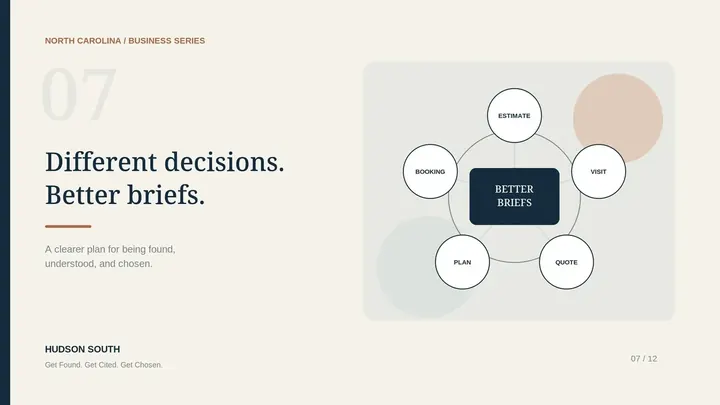
An estimate, a first visit, and a supplier quote need different information. Compare five buying decisions to see what a useful AI-assisted content brief must contain.
-
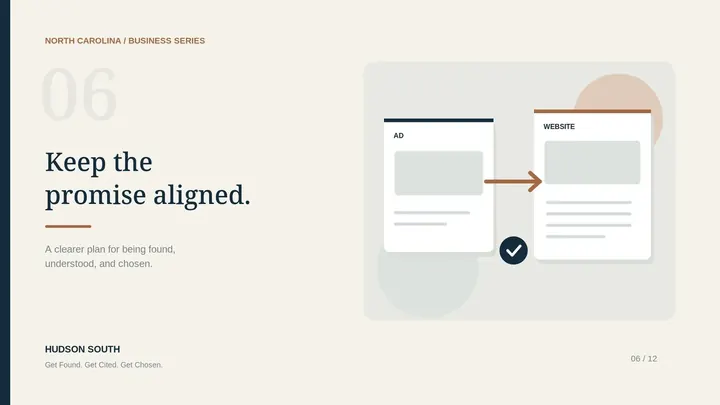
When Your North Carolina Ads Outrun Your Website Content
The ad, article, inquiry form, and follow-up need to tell the same story. Use a practical responsibility table to find the unanswered questions between the promise and the next step.
-
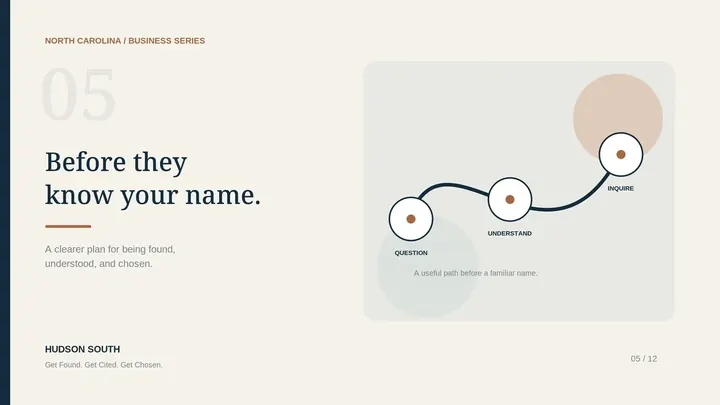
Winning New Customers Before They Know Your North Carolina Brand
Unfamiliar buyers do not start with your company name. Two customer journeys show how useful questions, comparisons, and next steps create a path toward your business.
-
How to Find the Content Gaps Your Charlotte Competitors Leave Open
A four-page comparison of Charlotte-area HVAC and machining content shows how to find useful questions without copying a competitor or pretending to know its results.
-
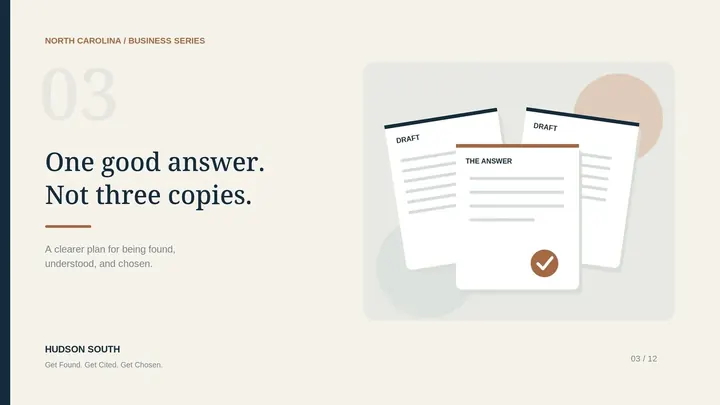
Raleigh, Cary, and Durham Do Not Need Three Copies of Your Blog
A city name does not give an article a new purpose. Use a local-content decision table to distinguish meaningful Triangle differences from repeated copy.
-
Why Your Business Shows Up in Raleigh but Not Charlotte
A Raleigh result and a Charlotte result may be measuring different things. Use a comparison log to separate Maps, organic search, and observed AI answers before changing the content plan.
-
How North Carolina Businesses Can Compete in More Than One Market
Before adding cities to a content calendar, decide which customers you can serve and what they need to understand. A market-priority worksheet and two business examples show where to begin.
-
A “Contact Us” Button Cannot Explain Your Estate Planning Intake
Explain the purpose of the first call, appointment terms, and preparation before asking someone to begin. Connect the website invitation with the firm's actual intake process.
-
Who Owns Your Estate Planning Content After It Publishes?
An old FAQ and a current service page can describe different engagements. Give the team a clear owner for resolving the promise and correcting the places it appears.
-
Where Is the Attorney's Judgment in Your Estate Planning Blog?
A distinctive estate planning article needs the attorney's reasoning. Capture the questions, assumptions, and conditions behind the explanation before polishing the voice.
-
Your Estate Planning Answer Needs Its Conditions Attached
A clear estate planning answer keeps its subject and important conditions together. Use a passage review to protect the approved meaning when surrounding context is absent.
-
What Does Your Estate Planning Website Mean by “Comprehensive”?
“Comprehensive” and “flat fee” need a firm-specific explanation. Make the scope, responsibilities, and fee process understandable before asking prospects to compare services.
-
The Estate Planning Questions a List of Documents Cannot Answer
A visitor may know what has changed in their life without knowing which estate planning service to investigate. Give each situation a clear path to work the firm actually offers.
-
What Does a Settlement Number Explain About Your Firm?
A settlement figure can attract attention while leaving the firm's contribution unexplained. Give a prospective client enough context to understand the work behind the result.
-
Does Your Personal Injury Content Make Sense When Quoted Alone?
A polished page can rely on layout and nearby qualifications to make its claims clear. Take one answer out of that setting and see whether it still describes your firm accurately.
-
What Does Your Personal Injury City Page Add Besides the City Name?
A local page should make the firm's connection to a city understandable. Examine service access, useful local questions, and the evidence behind the copy before commissioning another location page.
-
Your Personal Injury Pages Should Not All Tell the Same Story
When every page repeats the same introduction and contact pitch, a larger website can still leave important questions unanswered. A page-role map shows what each piece should contribute.
-
The Questions Your Personal Injury Website Leaves for Intake
A contact button tells a prospective client what to do. The surrounding page should explain what happens when they do it, using information intake and the firm's attorneys can confirm.
-
Which Cases Is Your Personal Injury Content Written to Attract?
Before assigning another personal injury article, settle the practice decision behind it. A worked example shows what a topic list leaves open and how to create a more useful brief.
-
Your Estate Planning Website Explains Documents. Does It Explain You?
Your estate planning website can explain documents while leaving the firm's services, judgment, and next steps unclear. Build the content plan around those decisions.
-
Your Personal Injury Firm Has a Content Calendar. Does It Have a Plan?
A calendar can keep a law firm's content moving while leaving its most important decisions unresolved. Here is what a personal injury marketing team needs before the next assignment.
-
The Proof Your Website Needs to Help Buyers Choose
A convincing website gives buyers something to examine. Match your experience, process, testimonials, and results to the questions behind the purchase.
-
AI Content That Still Sounds Like Your Business
A useful voice brief contains the way your business explains decisions, handles questions, and sets expectations. Give AI that material, then review what survives in the draft.
-
Update Existing Pages or Publish New Content? How to Decide
A content calendar should explain why each assignment deserves attention. Here is how to compare a buyer's question with the pages you already have and choose a useful next step.
-
Measuring AI Search: Mentions, Citations, Visits, and Leads
Track what AI answers show, what brings attributable visits, and what turns into a useful inquiry. A clear measurement plan keeps those outcomes distinct.
-
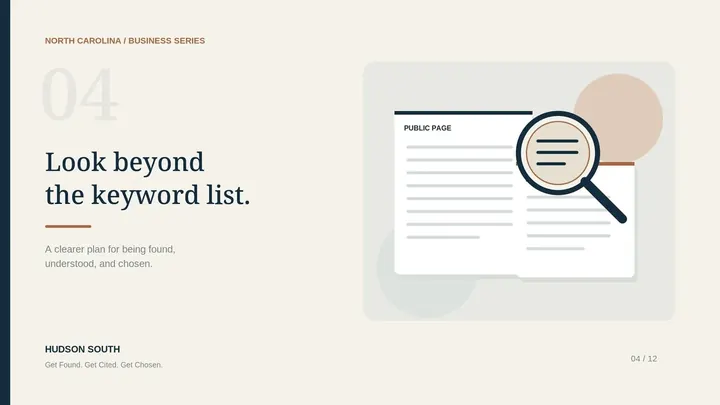
How to Find the Buyer Questions Missing From Your Website
The next useful topic may already be in a sales conversation or a project clarification. Learn how to capture those questions, check the answers on your website, and decide which gaps deserve attention.
-
Why Isn’t ChatGPT Recommending My Business?
A missing recommendation is a reason to investigate. Start with the answer you received, then check access, business information, and the questions your pages leave unresolved.
-
How to Get Your Business Found in AI Search
A useful AI search strategy begins with the questions customers need answered, the business knowledge behind those answers, and evidence they can inspect.























Free competitor analysis
See what your competitors have that you don't.
We build a full gap analysis for your market and walk you through it on a free 30-minute call. Nothing to buy at the end of it.